
Weak Enforcement Fuels Illicit Financial Flows in Nigeria

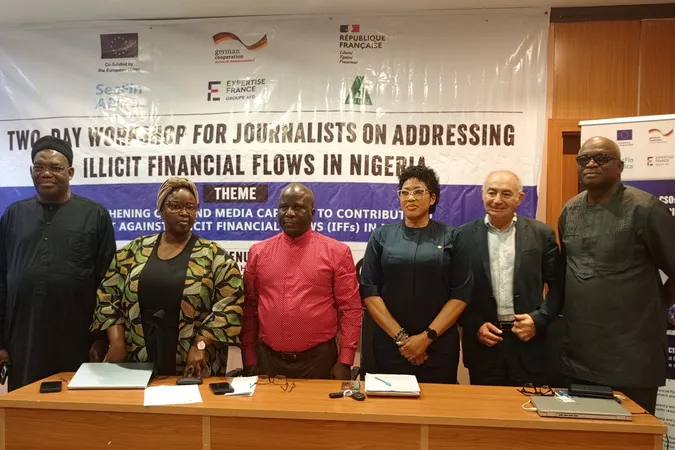
During a workshop in Akwa Ibom State titled “Strengthening the Capacity of Civil Society Organisations (CSOs) and the Media to Contribute to the Fight Against Illicit Financial Flows in Nigeria,” stakeholders identified several factors contributing to Illicit Financial Flows (IFFs) in Nigeria. Aliyu M. Yusuf, a former director of Proceeds of Crime at the Economic and Financial Crimes Commission (EFCC), stated that weak enforcement, poor inter-agency coordination, fragmented data systems, and inadequate institutional capacity were major issues.
He noted that while Nigeria has a robust legal framework to combat IFFs, implementation remains a challenge. Yusuf defined IFFs as money illegally earned, transferred, or utilized across borders, including proceeds of corruption and tax evasion.
He emphasized that IFFs undermine Nigeria’s economic development by reducing government revenue and depriving resources needed for development. Key laws supporting the fight against IFFs include the Money Laundering (Prevention and Prohibition) Act 2022 and the EFCC Act, among others.
Key institutions involved include the EFCC, ICPC, NFIU, and Nigeria Customs Service.
Plus234Feed summary based on reporting from Blueprint. Read the original report below.
Read full article
Continue on Blueprint
Get the week in one email
Top stories, NPFL results, the naira, every Friday morning. Free, one email a week.
Related Stories
ICPC's Dr. Musa Aliyu Launches Anti-Corruption Training Workshop

Ibeno Council Demands Transparency in PIA Implementation
GIABA Flags Extractive Sector for Illicit Financial Flows
EFCC Reveals N1.23trn Illicitly Moved from Nigeria
EFCC Recovers Over ₦1 Trillion in Illicit Funds
Akwa Ibom Stakeholders Address Rising Street Children Issue
Get Plus234Feed on messaging apps
Same headlines, delivered where you already scroll.