

Nigeria's Debt Reaches N166.79 Trillion, Approaching 40% GDP
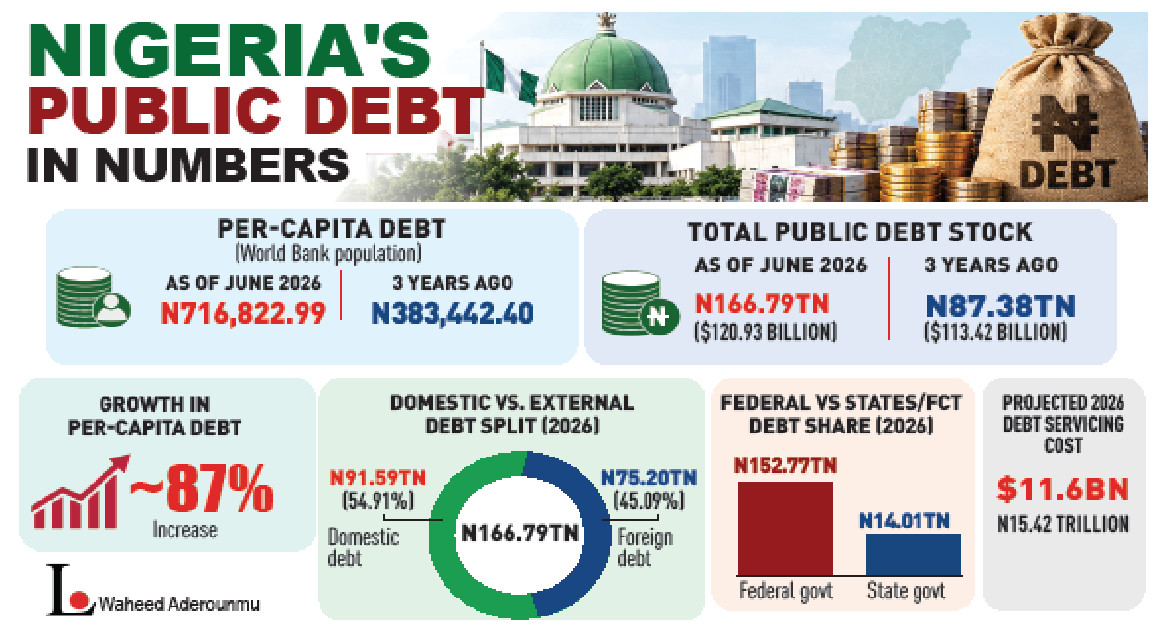
As of June 30, 2026, Nigeria's total public debt has increased to N166.79 trillion, approaching 40% of the country's gross domestic product (GDP). This figure represents a rise of N7.44 trillion from N159.35 trillion at the end of March 2026, marking a 4.7% increase quarter-on-quarter.
Domestic debt constitutes N91.59 trillion (54.91%), while external debt is N75.20 trillion (45.09%). In dollar terms, the total public debt is approximately $120.93 billion.
The Federal Government of Nigeria (FGN) is responsible for N152.77 trillion, about 91.6% of the total debt, with external obligations at N65.77 trillion and domestic at N87 trillion. States and the Federal Capital Territory hold the remaining N14.01 trillion.
Economic analyst Bismarck Rewane expressed concerns regarding the debt's size, emphasizing the lack of corresponding productivity increases. He noted that the country is facing a cost-of-living crisis, making the growing debt burden more significant, despite potential benefits from higher oil prices.
Plus234Feed summary based on reporting from Daily Trust. Read the original report below.
Read full article
Continue on Daily Trust
Get the week in one email
Top stories, NPFL results, the naira — every Friday morning. Free, one email a week.
Related Stories

Nigeria's Public Debt Reaches ₦166.79 Trillion in 2026
Nigeria's Debt Per Citizen Surges to N716,822 in 2026

Nigeria's Debt Hits N166.79 Trillion, Burden Per Citizen Rises
Nigeria's Domestic Debt Service Drops to N2.14 Trillion

Nigerian Stock Market Rises as NGX Index Gains 0.21%

GTCO Reports N603bn Profit and Declares N1 Dividend
Get Plus234Feed on messaging apps
Same headlines, delivered where you already scroll.


