

Scientists Win 2026 Nobel for Breakthroughs in Optogenetics

The 2026 Nobel Prize in Physiology or Medicine was awarded to Karl Deisseroth of the Howard Hughes Medical Institute and Stanford University, Peter Hegemann of Humboldt University of Berlin, and Georg Nagel of the University of Würzburg for their contributions to optogenetics. The Nobel Assembly at Karolinska Institutet announced the award on October 5, 2026, recognizing their discoveries related to light-gated ion channels.
Hegemann and Nagel's research began in the early 2000s when they investigated how the microscopic alga Chlamydomonas navigates towards light, leading to the identification of the protein channelrhodopsin. Deisseroth expanded on this by inserting the channelrhodopsin gene into rat nerve cells, enabling light-triggered nerve signals.
His findings were published in 2005, and by 2007, he demonstrated this technique in living mice brains. Optogenetics has since revolutionized neuroscience, allowing precise control over nerve cells and aiding in understanding neural circuits related to memories and emotions.
Plus234Feed summary based on reporting from Legit.ng. Read the original report below.
Read full article
Continue on Legit.ng
Get the week in one email
Top stories, NPFL results, the naira — every Friday morning. Free, one email a week.
Related Stories
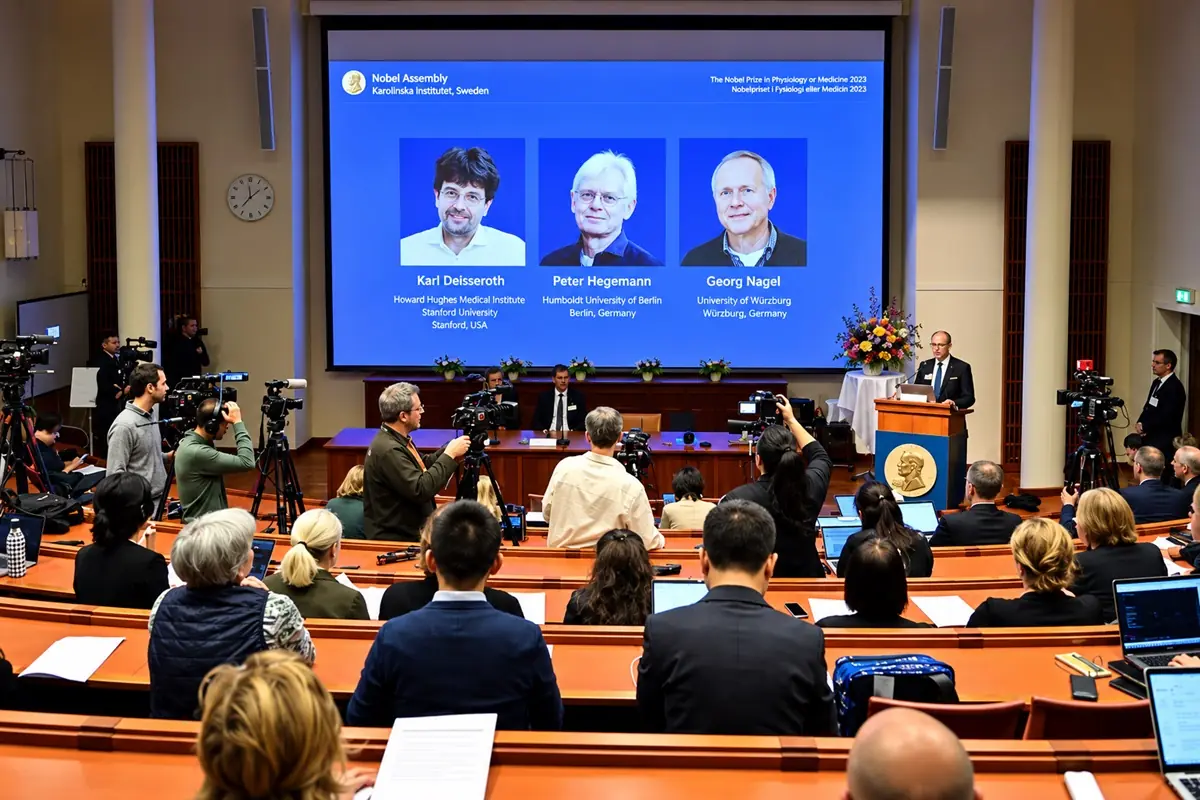
Scientists Deisseroth, Hegemann, and Nagel Win Nobel Prize
UN's Simon Stiell Warns of Extreme Heat Risks to Mothers

Rivers State Shuts Down 21 Health Facilities for Violations

Federal Government Establishes 10 Diagnostic Centres Nationwide

Nigeria's Health Minister Launches 10 New Diagnostic Centres

Rivers State Government Closes 21 Illegal Health Facilities
Get Plus234Feed on messaging apps
Same headlines, delivered where you already scroll.


