

Nigeria's FAAC Allocations Surge: A Call for Development

The National Bureau of Statistics’ Multidimensional Poverty Index reveals that 133 million Nigerians, or 63 percent of the population, are poor across various dimensions, with poverty rates ranging from 27 percent in Ondo to 91 percent in Sokoto. The Office of the Accountant-General of the Federation reports that combined state and local government allocations increased from ₦5.14 trillion in 2022 to ₦13.22 trillion in 2025, marking a 157 percent rise.
Notable allocations include Lagos at ₦996 billion, Kano at ₦561 billion, Katsina at ₦406 billion, Jigawa at ₦352 billion, and Enugu at ₦275 billion. States received a total of ₦29.04 trillion from 2023 to 2025, averaging ₦334 billion per state.
However, historical patterns show that past allocation booms have not translated into sustainable development, as states often expand payrolls and overheads instead of capital projects. Local government allocations reached ₦11.45 trillion, yet these funds are still controlled by state structures despite a Supreme Court ruling in July 2024 granting financial autonomy to local councils.
Plus234Feed summary based on reporting from This Day. Read the original report below.
Read full article
Continue on This Day
Enjoy this article?
Get the weekly Nigerian roundup — top stories, NPFL, naira. One email, Sunday morning.
Related Stories
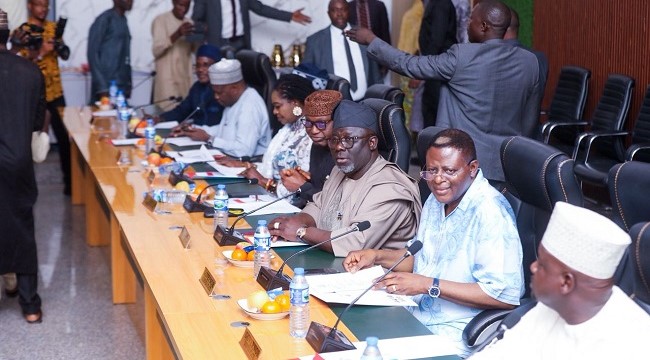
Nigeria's FAAC Allocates Record N3.007 Trillion in July 2026
FAAC Allocates N3.79 Trillion to Six Nigerian States
Five States Collect N317.5bn, Exceeding 20 Others
Governors Under Scrutiny Over N47tn FAAC Disbursement
FAAC Disburses Record N3.007 Trillion for July 2026
FAAC Distributes N2.55 Trillion June Revenue to Governments
Get Plus234Feed on messaging apps
Same headlines, delivered where you already scroll.


