

Retail Loans Decline as Consumer Credit Rises to N3.81T

In January 2026, consumer credit in Nigeria rose to N3.81 trillion, yet retail loans experienced a decline during the same period. This situation reflects tighter bank liquidity and a cautious approach to credit expansion, influenced by the Central Bank of Nigeria's (CBN) monetary policies aimed at curbing inflation and stabilizing the foreign exchange market.
Despite the slowdown in retail lending, personal loans remained a significant driver of household borrowing, indicating a sustained demand for consumer credit. The CBN's report highlighted that the banking sector's liquidity tightened further, contributing to slower lending growth across various economic segments.
The total credit in the economy expanded marginally by 0.17% to N57.41 trillion in January 2026, driven mainly by higher lending to the agricultural sector. The industrial sector saw a decline in credit, while the service sector remained the largest recipient of bank credit, accounting for 56.98% of total loans.
The CBN warned that despite successful bank recapitalization efforts, lending remains skewed, indicating a disconnect between bank products and sector needs.
Plus234Feed summary based on reporting from Nairametrics. Read the original report below.
Read full article
Continue on Nairametrics
Get the week in one email
Top stories, NPFL results, the naira — every Friday morning. Free, one email a week.
Related Stories

Personal Loans in Nigeria Reach N1.96 Trillion in 2026

Nigeria's Private Sector Credit Drops N14 Trillion in 2026
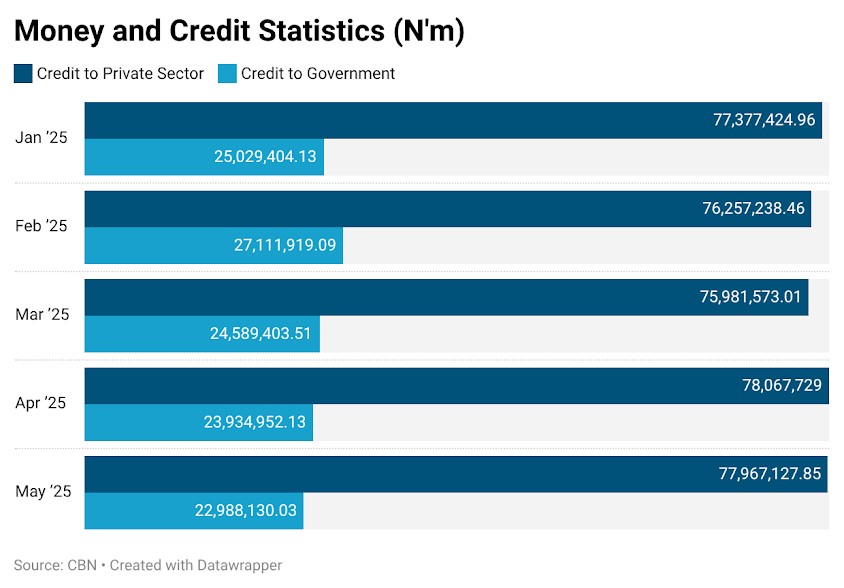
Nigerian Private Sector Credit Falls 14% to N81.04 Trillion
Private Sector Borrowing Rises by N380bn After Rate Cut

Banks' Borrowing from CBN Drops 96% to N2.33 Trillion
CBN Reports N15.66 Trillion Government Lending Surge
Get Plus234Feed on messaging apps
Same headlines, delivered where you already scroll.


